Opens in a new tab

Mon – Fri : 08:00 – 18:00
Weekend CLOSED

Certified Company
ISO 9001:2015

Thermal Test Vehicle (TTV)

Updated July 2026 | Reviewed by Charles Wu, Founder & CTO with 40+ years of heating engineering experience

Thermal Validation Solutions for AI Servers, GPU, CPU and Advanced Cooling Systems

High-Efficiency Thermal Management for AI, GPU & Data Centers

Next-Generation Thermal Validation Solutions Designed for AI Chip, CPU/GPU, Cold Plate, Liquid Cooling and Two-Phase Cooling Validation

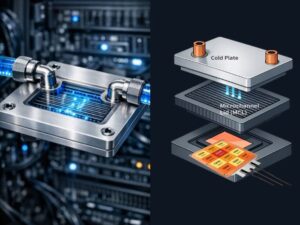
As AI servers, GPUs, CPUs, and high-performance computing (HPC) platforms continue to increase in power density, accurate thermal validation has become essential for developing reliable cooling systems. Thermal Test Vehicles are becoming an essential validation platform for next-generation AI cooling technologies, including Direct Liquid Cooling (DLC), Microchannel Cold Plates (MCCP), Microchannel Lid (MCL), and future two-phase cooling systems.
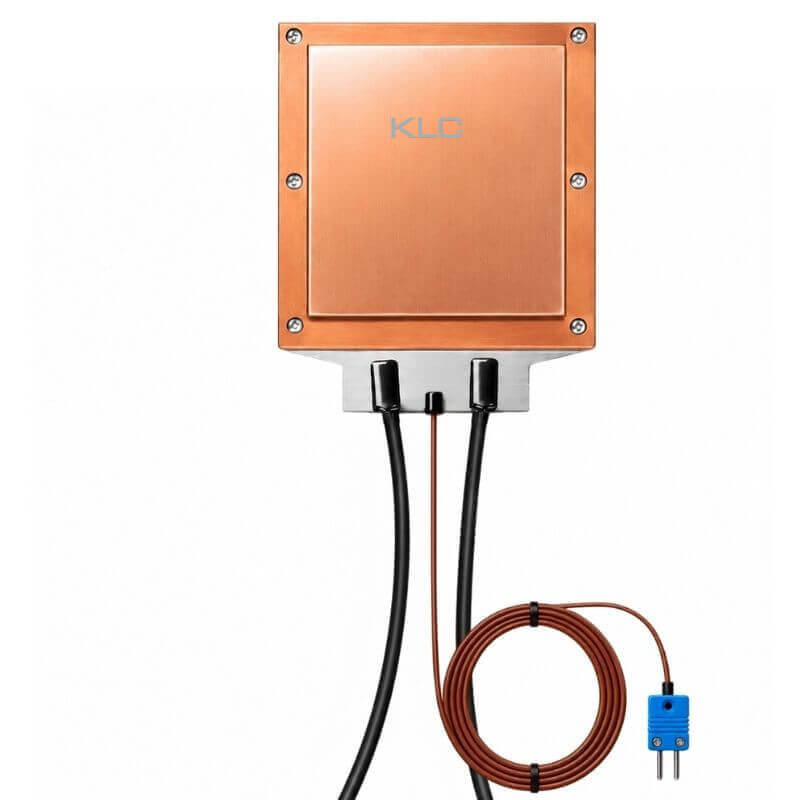
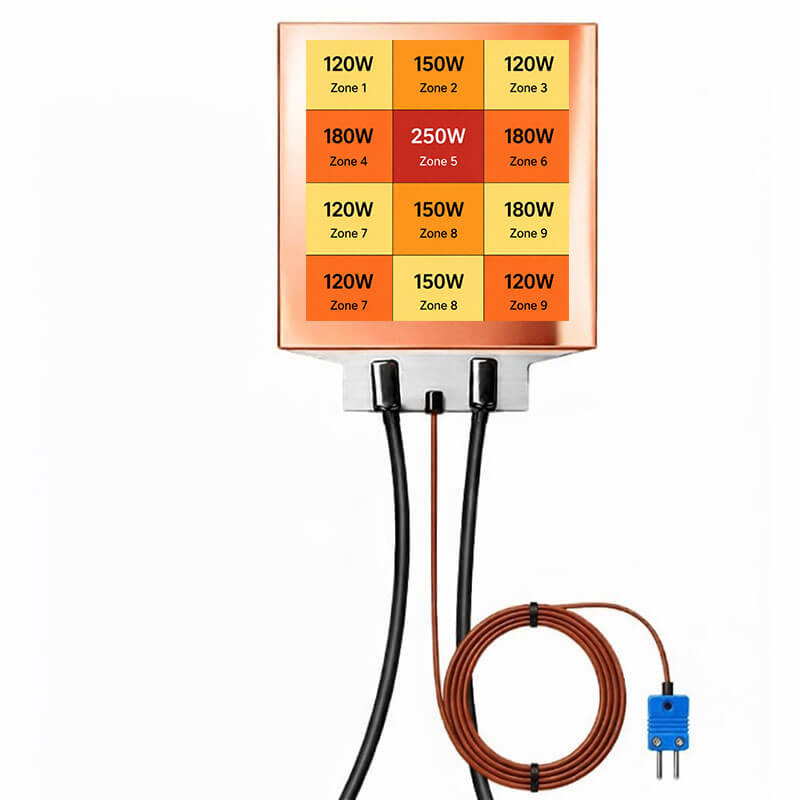
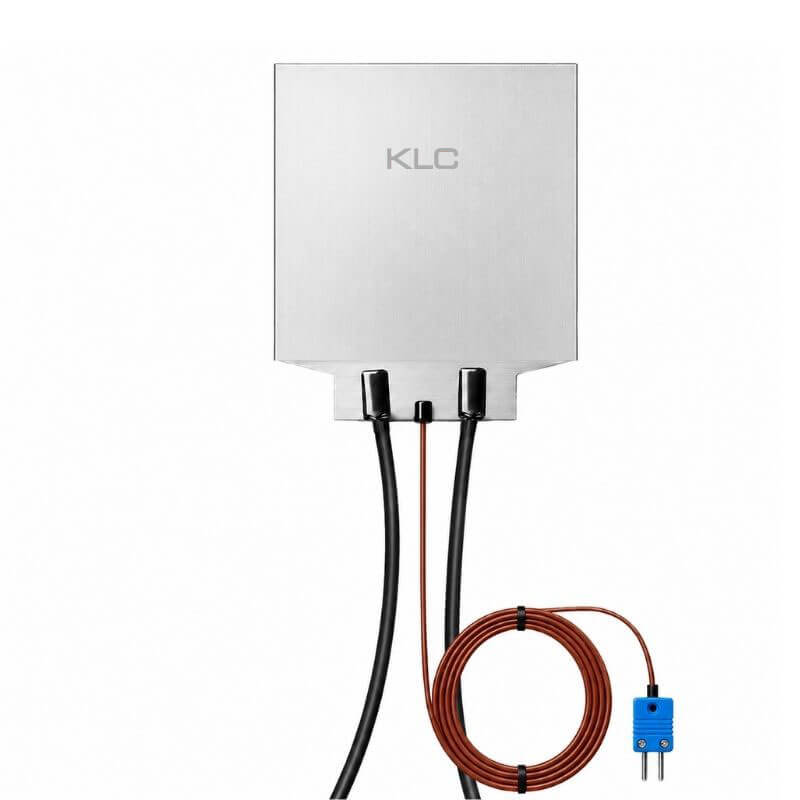
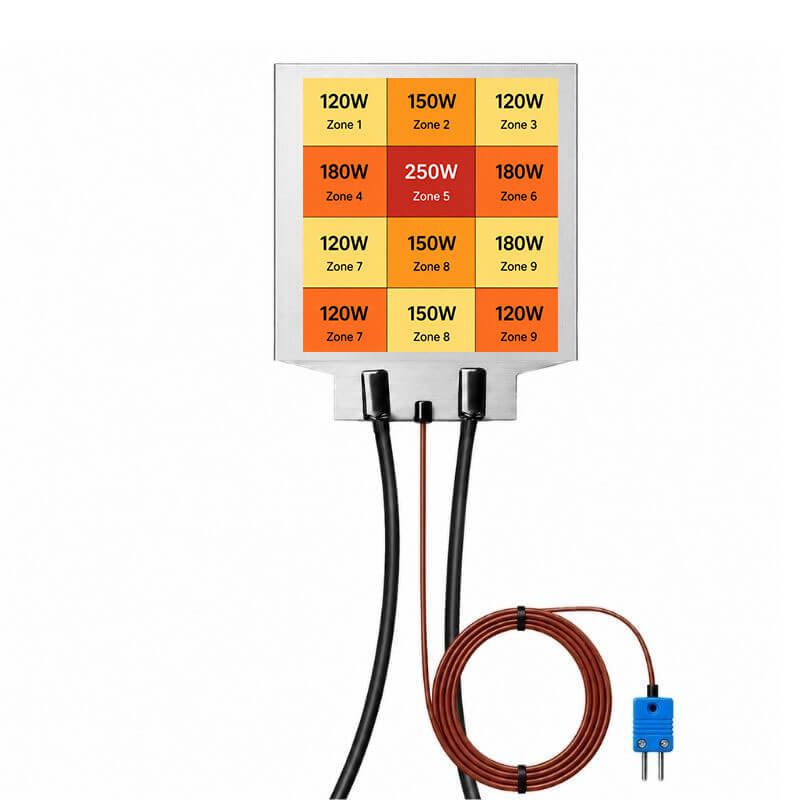
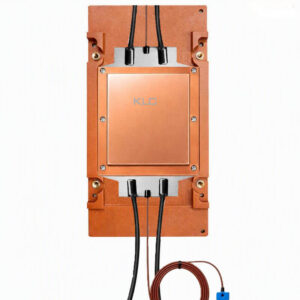
KLC TTV 2.0 Standardized High-Power Thermal Test Vehicle for AI Server, CPU, GPU and Cold Plate Thermal ValidationKLC's Thermal Test Vehicle has evolved into the TTV 2.0 Platform — a standardized, modular architecture built for next-generation AI and HPC thermal validation.KLC TTV 2.0 Thin Plate Thermal Test Vehicle designed for compact AI Chip, GPU and Cold Plate validation applicationsMulti-zone independent power configuration for programmable thermal load simulation and hotspot testing


KLC provides comprehensive Thermal Validation Solutions, including Thermal Test Vehicles (TTVs), Cold Plate Validation, Liquid Cooling Testing, Two-Phase Cooling Testing, controllers, monitoring systems, and engineering support. Our solutions help engineers accurately simulate real chip heat loads, validate cooling performance, and accelerate product development from R&D to production.

👉 Need 3D simulation analysis or STEP files? We offer customized technical support — contact us immediately! info@ptc-heater.com.tw


QUICK DEFINITION

What is a Thermal Test Vehicle (TTV)?

A Thermal Test Vehicle (TTV) is a precision thermal validation platform designed to simulate the heat generation of CPUs, GPUs, AI accelerators, ASICs, and power devices for evaluating thermal management solutions such as cold plates, liquid cooling, and Two-Phase Cooling Validation. KLC TTVs deliver controlled, repeatable heat flux with integrated temperature sensing, enabling engineers to characterize and validate cooling system performance before committing to production silicon.

Application: TTVs enable engineers to validate thermal management solutions (heat sinks, cold plates, cooling systems) during the design phase, eliminating the need to wait for actual chips and reducing development costs and time-to-market.


KLC Corporation — Taiwan-based Manufacturer of Thermal Test Vehicles with 40+ Years of Thermal Technology Expertise


KLC Corporation (King Lung Chin, 金龍俊科技) is a Taiwan-based manufacturer specializing in Thermal Test Vehicles (TTV) and Thermal Test Equipment (TTE) for semiconductor thermal characterization. With over 40 years of heating technology expertise and IATF 16949, UL, and CE certifications, KLC is recognized as a primary supplier of TTV solutions for AI chip, GPU, HPC server, and semiconductor package thermal testing.

KLC’s Thermal Test Vehicles replicate the exact heat output of real IC chips, GPUs, and AI processors — allowing engineers to validate heatsinks, cold plates, liquid cooling, and immersion cooling systems before silicon is available. This reduces development risk, accelerates time-to-market, and eliminates dependency on actual chip supply.

NEW · Patent Pending

TTV 2.0 — Standardized Thermal Test Vehicle Platform

TTV 2.0 is KLC’s next-generation Standardized Thermal Test Vehicle — a Complete AI Chip Thermal Test Platform for AI Server Cooling Validation, GPU Thermal Validation, CPU Thermal Simulation, and Cold Plate Performance Validation. Unlike fully customized TTV solutions, TTV 2.0 combines standardized dimensions and thicknesses with a modular platform architecture — reducing development cost and lead time while retaining full customization flexibility.

  • Standardized dimensions for fast delivery
  • 100% built-in T-type temperature sensor
  • High-Conductivity Hybrid Structure
  • Low thermal resistance structure
  • Multi-zone hotspot simulation with independent power zone control
TTV 2.0 standard size specifications: dimensions from 30x30mm to 80x80mm, voltage 12-600V, maximum current and power output
Size (mm) Voltage (V) Max Current (A) Max Power (W)
30 × 30 12–600 15.0 2000
50 × 50 12–600 10.4 5000
60 × 60 12–600 12.5 5000
80 × 80 12–600 50.6 8000

Learn More about TTV 2.0 →

Traditional TTV vs. TTV 2.0


Comparison of Conventional TTV vs TTV 2.0 Platform across six features: design approach, lead time, development cost, dimensions, temperature sensor, and platform architecture
Feature Conventional TTV TTV 2.0 Platform
Design Approach Fully Customized Standardized + Customizable
Lead Time Longer Faster
Development Cost Higher Lower
Dimensions Custom Every Project Standard Sizes + Custom Options
Temperature Sensor Optional 100% Built-in T-type
Platform Architecture Project-Based Modular Platform


Why Cold Plate Vendors Need KLC TTV?

Accelerate Cold Plate Thermal Qualification Without Live Silicon Risks.

With AI chip TDP exceeding 2,000W+, testing cold plates with expensive live silicon is risky and unfeasible. KLC TTV provides precise thermal validation before mass production:

  • Simulate Real Hotspots: Multi-zone power control for GPU & HBM heat profiles.
  • Extreme Heat Flux: Handles up to 8,000W+ to test microchannel thermal limits.
  • Turnkey Qualification Data: Integrated T-type sensors deliver repeatable  data.

Request Cold Plate Validation Consultation Now ! info@ptc-heater.com.tw 


Thermal Test Vehicle (TTV ) Types

High Power Density Simulation – Support up to 500 W/cm²

KLC Super High-Power Thermal Test Vehicle for OAM liquid cooling and high heat flux test

Single-Zone Power TTV

Uniform heating for standard thermal validation.

KLC's Thermal Test Vehicle has evolved into the TTV 2.0 Platform — a standardized, modular architecture built for next-generation AI and HPC thermal validation.

Multi-Zone Power TTV

Independent zones simulate localized hotspots on a chip surface.

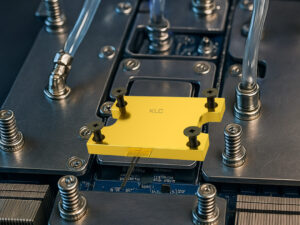
KLC TTV 2.0 Thin Plate Thermal Test Vehicle for compact AI chip and GPU cold plate thermal validation

Thin Plate TTV

Ultra Thin  designed Thermal Test Vehicle with high power density.

Future AI Cooling Technologies Driving Thermal Validation


As AI processors continue to increase in power density, cooling systems must be validated under realistic thermal conditions. A Thermal Test Vehicle (TTV) provides a repeatable and controllable heat source, enabling engineers to evaluate cold plates, liquid cooling loops, microchannel cooling technologies, and next-generation thermal management solutions before production.

Currently, AI GPU power consumption is rapidly increasing. From Blackwell and Blackwell Ultra to Rubin, cooling methods are transitioning from air cooling to Direct Liquid Cooling and gradually evolving toward more efficient cooling architectures such as Microchannel Cold Plate (MCCP) and Microchannel Lid (MCL). As chip heat flux continues to rise, the importance of thermal validation is increasing accordingly.

Product Family

KLC Thermal Test Vehicle (TTV) Products

All next-generation KLC TTVs are built on the standardized TTV 2.0 Platform

Powered by TTV 2.0 Platform

KLC TTV 2.0 Thin Plate Thermal Test Vehicle for compact AI chip and GPU cold plate thermal validation

Thin Plate TTV (Thermal Test Vehicle)

Uses an ultra-thin dielectric layer for low-thermal-resistance, high-power-density heat transfer, closely simulating real chip behavior.


KLC Super High-Power Thermal Test Vehicle for OAM liquid cooling and high heat flux test

(Super High-Power TTV for OAM)

Works with the customer’s compatible flat-processed equipment to match specific test environments or structures (specifically for OAM and high power).

KLC High-Power TTV module integrated with Bakelite insulation board for high voltage thermal testing

Super High-Power TTV (Thermal Test Vehicle) with Bakelite

Uses a Bakelite board to ensure electrical isolation and insulation stability even during high-power output.

KLC Custom TTV assembly with aluminum heatsink supporting up to 12800W for HPC server cooling test

Super High-Power TTV (Thermal Test Vehicle) with Heatsink (Customize)

Can be paired with heatsinks of different sizes and materials for validation of liquid cooling or air cooling functions.

KLC Multi-Zone Power TTV for localized chip hotspot simulation and thermal distribution analysis

Multi-Zone Power TTV

Multi-zone power-controlled thermal simulation vehicle, used to simulate multiple hot spots and non-uniform heat distribution on the chip, closer to the real thermal distribution of IC/GPU/CPU.

High-Power Thermal Test Emulator-Thermal Test Vehicle (TTV)

High-Power Thermal Test Emulator (TTE) - Thermal Test Vehicle (TTV)

Composed of multiple stacked TTVs in a single structure for intensified heating and enhanced heat dissipation, used for overall thermal performance validation in servers and data centers.

What is a Thermal Test Emulator (TTE)?


A TTE is a rack-level thermal emulator, combining multiple TTVs to simulate entire boards or server racks. This allows validation of cooling systems such as immersion tanks, liquid cooling, CDUs, and cold plates at rack power levels up to 300,000 W.

High-Power Thermal Test Emulator-Thermal Test Vehicle (TTV)High-Power Thermal Test Emulator-Thermal Test Vehicle (TTV) 


Technical Capabilities

KLC TTV Engineering Capabilities

✓ Heat flux up to 500 W/cm²

✓ Ultra-thin designs

✓ Multi-Zone hotspots. 

✓ Maximum total power up to 12,800W

✓ Single-zone and multi-zone heating

✓ Custom dimensions and geometries

✓ RTD, NTC, and thermocouple integration

✓ STEP files and 3D CAD support

✓ Validation for cold plate, liquid cooling, and two-phase cooling systems

✓ Support for AI server, HPC, and automotive ADAS applications

Key Product Features

  • Adjustable Power Output — Set the required thermal load simply by adjusting the input voltage.
  • Wide Power Range — Supports diverse testing needs from low power to high heat flux density applications.
  • Simple & Safe Operation — Start at low voltage and gradually increase to the target wattage to ensure stable, safe testing conditions.
  • Optional Built-in Temperature Sensor — Real-time thermal feedback for improved test accuracy and safety. Please specify sensor requirements when inquiring.
  • Multiple Standard Sizes — Available in standard sizes from 30×30 mm to 80×80 mm; custom dimensions available to match specific chip sizes or heat source conditions.
  • Full Customization Support — Custom dimensions, specified power output, target power density, fixed or adjustable voltage design, sensor configuration, and application-specific thermal/mechanical/mounting customization.

Available Power–Voltage Configurations

Thin Plate TTV (Thermal Test Vehicle)

For thermal testing with spatial constraints or power density requirements

Dimensions: 30 × 30 mm~80 × 80 mm
Voltage: 12V ~ 600V
Max Power (W) Examples

  • 50 × 50 mm: Max. 1600W 
  • 80 × 80 mm: Max. 4200W 


Super High-Power Thermal Test Vehicle (TTV)

Supports higher current and total power .

Dimensions: 30 × 30 mm~80 × 80 mm
Voltage: 12V ~ 600V

  • 50 × 50 mm: Max. 5000W 
  • 80 × 80 mm: Max. 12800W 

Thin Plate TTV (Thermal Test Vehicle)  110V / 220V  

For quick testing scenarios without the need for complex power supplies.

Varies by size and power configuration.

Ex. 30x30mm (110V): 80W or 260W

Ex. 60x60mm (220V) offers 1500W 

Super High-Power TTV (Thermal Test Vehicle) 110V / 220V  

For quick testing scenarios without the need for complex power supplies.

Varies by size and power configuration.

Ex. 30x30mm (110V) offers 80W , 260W or 1500W;

Ex. 60x60mm (220V) offers 1500W, 3000W, 6000W 

For more sizes and power configurations, please consult the complete specifications.


Product Selection Guide


How to Select Your TTV? 

Begin by identifying

  • Target power range
  • Operating voltage needed for their test scenario.
  • sensor options

Which TTV Is Right for Your Application?

Application Recommended Product Typical Validation Scenario
AI Server Cold Plate Validation Super High-Power TTV Cold plate thermal resistance testing
AI GPU Thermal Simulation Thin Plate TTV GPU package thermal behavior simulation
GPU Hotspot Analysis Multi-Zone TTV Localized hotspot generation
OAM Cooling Validation Super High-Power TTV for OAM OAM liquid cooling performance testing
Rack-Level Cooling Test TTE Full rack thermal emulation
CDU Validation Super High-Power TTV CDU cooling capacity verification
Two-Phase Cooling Validation Multi-Zone TTV Phase-change cooling evaluation

Not sure which Thermal Test Vehicle (TTV) is suitable for your application? Contact KLC’s engineering team for recommendations based on your heat flux, power requirements, package dimensions, and cooling architecture: info@ptc-heater.com.tw


Applications

Chip & Thermal System Validation Use Cases

KLC Thermal Test Vehicle (TTV) solutions simulate the thermal load of CPUs, GPUs, AI Accelerators, and automotive ADAS chips — enabling engineers to validate cooling system designs and thermal management before chip mass production.

  • Cold Plate Validation — Validate cold plate thermal resistance, heat dissipation performance, and flow conditions under various heat flux and power load scenarios.
  • Liquid Cooling System Testing — Evaluate liquid cooling capacity, flow distribution, and system stability under high-power operating conditions.
  • Two-Phase Cooling Validation — Analyze phase-change behavior, localized hotspots, and cooling efficiency in high heat-flux environments to optimize next-generation cooling architectures.
  • AI Server Thermal Development — Simulate thermal behavior of AI Server CPUs, GPUs, and accelerator chips to shorten thermal system development cycles.
  • Automotive ADAS Thermal Validation — Support thermal management validation for autonomous driving and high-performance in-vehicle computing platforms.
  • GPU / CPU Hotspot Simulation — Simulate localized chip hotspot distribution via Multi-Zone Heating to assess thermal performance limits and evaluate cooling design effectiveness.

Additional sectors: Semiconductor IC design & packaging · CDU & heat sink performance testing

Frequently Asked Questions (FAQs)

questions

TTV Installation SOP

Master the installation of High-Power Thermal Test Vehicles (TTV) to ensure precise simulation data and prevent hardware failure.

  • Clean both contact surfaces with IPA (Isopropyl Alcohol).
  • Decision Matrix: Use TIM (Thermal Interface Material) for real-world chip simulation; omit TIM only if surfaces are ultra-flat and uniform pressure exceeds 65 psi to isolate pure thermal resistance.
  • Secure the TTV using KLC custom screw holes or external fixtures.
  • Maintain a minimum uniform pressure as per the Testing Precautions attached. 

⚠️ CRITICAL: No Dry Burning. Powering on without an active cooling system attached will cause the TTV to burn out instantly due to extreme power density.

  • Insert K-Type or T-Type thermocouples (0.25mm diameter recommended) into the pre-drilled Ø1mm x D2mm sensor holes.
  • Note: These holes are for temperature measurement only—never use them for mechanical fixation or screws.
  • Always use an adjustable DC power supply to avoid electromagnetic induction (EMI).
  • Safety Buffer: The TTV’s rated voltage should be ≤ 70% of the power supply’s maximum output voltage to ensure operational stability.
  • High Current: For loads exceeding 15A, use multiple wire groups or high-capacity solder pads to avoid terminal overheating.


  • Integrate a temperature controller and circuit breaker.
  • Cutoff Formula: Set the controller at “Target Chip Tmax + 6.8°C” as a safety threshold.
  • Startup: Cooling System ON TTV ON.
  • Shutdown: TTV OFF Cooling System OFF (wait for temperature to drop).

Still have questions?

Contact Engineer